Be yourself; Everyone else is already taken.
— Oscar Wilde.
This is the first post on my new blog. I’m just getting this new blog going, so stay tuned for more. Subscribe below to get notified when I post new updates.
Many things that you haven't already know that simply makes sense
Be yourself; Everyone else is already taken.
— Oscar Wilde.
This is the first post on my new blog. I’m just getting this new blog going, so stay tuned for more. Subscribe below to get notified when I post new updates.
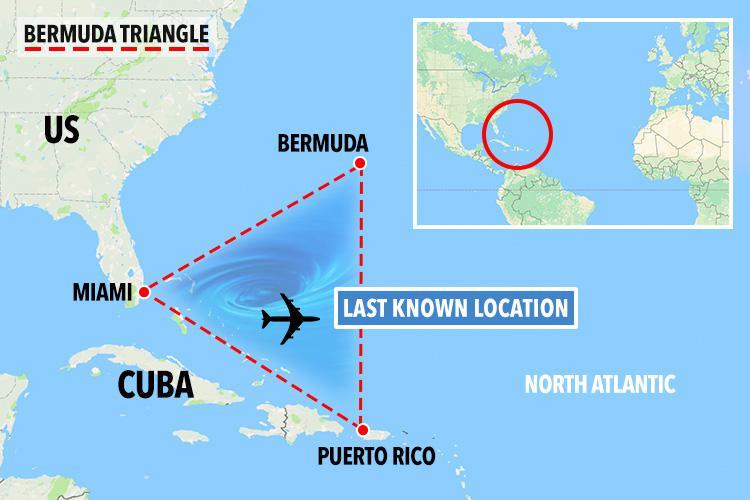
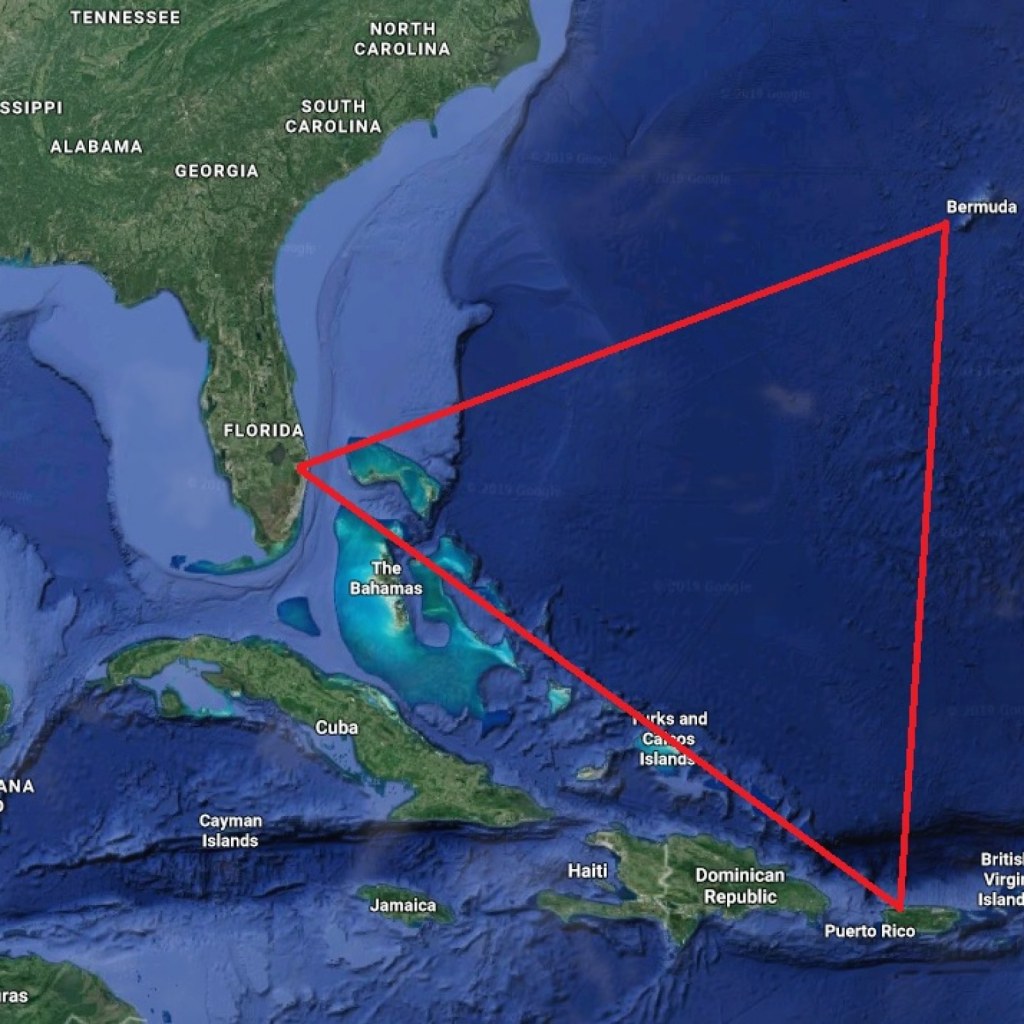
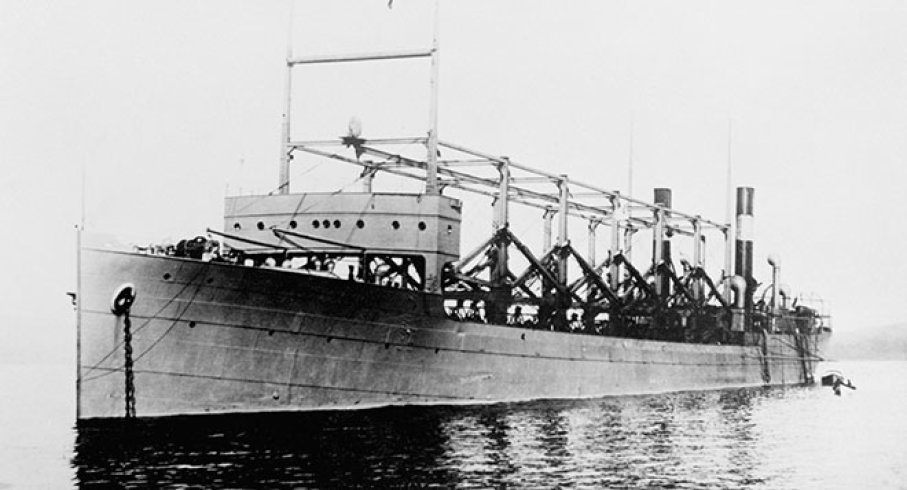
For other uses, see Bermuda Triangle (disambiguation).”Devil’s Triangle” redirects here. For other uses, see Devil’s Triangle (disambiguation).
| Bermuda Triangle | |
|---|---|
| Devil’s Triangle | |
| One version of the Bermuda Triangle area | |
| Coordinates | 25°N 71°WCoordinates: 25°N 71°W |
| Part of a series on the |
| Paranormal |
|---|
| Main articles[show] |
| Skepticism[show] |
| Related[show] |
| Parapsychology[show] |
| vte |
The Bermuda Triangle, also known as the Devil’s Triangle or Hurricane Alley, is a loosely defined region in the western part of the North Atlantic Ocean where a number of aircraft and ships are said to have disappeared under mysterious circumstances. Most reputable sources dismiss the idea that there is any mystery.
The vicinity of the Bermuda Triangle is amongst the most heavily traveled shipping lanes in the world, with ships frequently crossing through it for ports in the Americas, Europe and the Caribbean islands. Cruise ships and pleasure craft regularly sail through the region, and commercial and private aircraft routinely fly over it.
Popular culture has attributed various disappearances to the paranormal or activity by extraterrestrial beings. Documented evidence indicates that a significant percentage of the incidents were spurious, inaccurately reported, or embellished by later authors.
The earliest suggestion of unusual disappearances in the Bermuda area appeared in a September 17, 1950, article published in The Miami Herald (Associated Press)[1] by Edward Van Winkle Jones.[2] Two years later, Fate magazine published “Sea Mystery at Our Back Door”,[3][4] a short article by George Sand covering the loss of several planes and ships, including the loss of Flight 19, a group of five US Navy Grumman TBM Avenger torpedo bombers on a training mission. Sand’s article was the first to lay out the now-familiar triangular area where the losses took place. Flight 19 alone would be covered again in the April 1962 issue of American Legion magazine.[5] In it, author Allan W. Eckert wrote that the flight leader had been heard saying, “We are entering white water, nothing seems right. We don’t know where we are, the water is green, no white.” He also wrote that officials at the Navy board of inquiry stated that the planes “flew off to Mars.”[6] Sand’s article was the first to suggest a supernatural element to the Flight 19 incident.
In February 1964, Vincent Gaddis wrote an article called “The Deadly Bermuda Triangle” in the pulp magazine Argosy saying Flight 19 and other disappearances were part of a pattern of strange events in the region.[7] The next year, Gaddis expanded this article into a book, Invisible Horizons.[8]
Other writers elaborated on Gaddis’ ideas: John Wallace Spencer (Limbo of the Lost, 1969, repr. 1973);[9] Charles Berlitz (The Bermuda Triangle, 1974);[10] Richard Winer (The Devil’s Triangle, 1974),[11] and many others, all keeping to some of the same supernatural elements outlined by Eckert.[12]
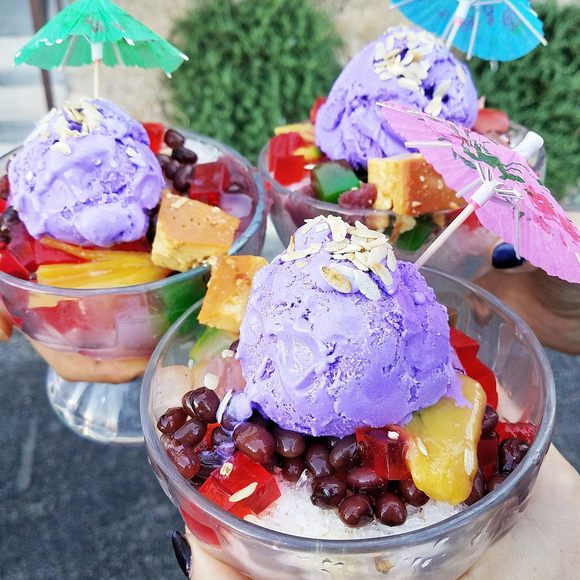
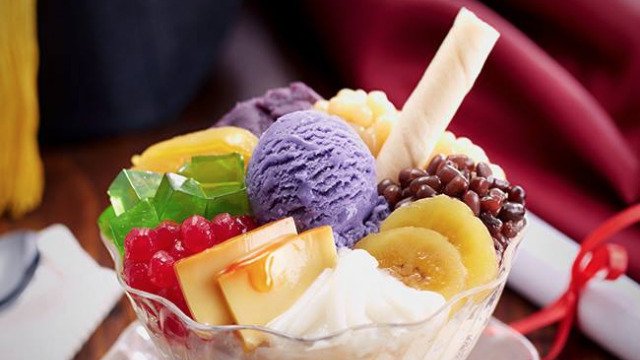
Halo-halo (Tagalog for “mixed”), also spelled haluhalo, is a popular Filipino cold dessert which is a concoction of crushed ice, evaporated milk and various ingredients including, among others, ube, sweetened beans, coconut strips, sago, gulaman (seaweed gelatin), pinipig rice, boiled root crops in cubes, fruit slices, flan, and topped with a scoop of ice cream.
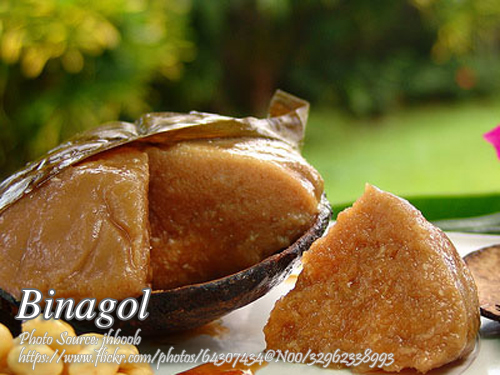
Binagol is a Filipino sweet steamed delicacy made from mashed giant tarocorms, condensed milk, sugar, coconut milk, and egg yolks. It is distinctively placed in half of a coconut shell and then wrapped in banana leaves and twine. The name means “to place in a coconut shell”, from Visayanbagol, “coconut shell”. Binagol traditionally use the corms of the giant taro (locally known as talyan or talian), however, the corms of taro (locally known as gabi) can also be used. The delicacy originates from the islands of Leyte and Samar in the Eastern Visayas.[1][2][3][4]
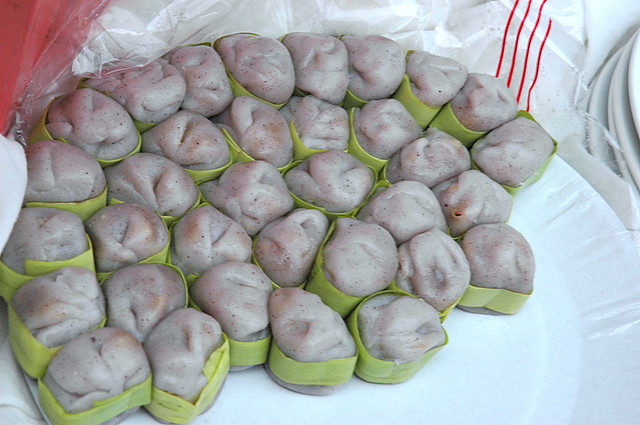
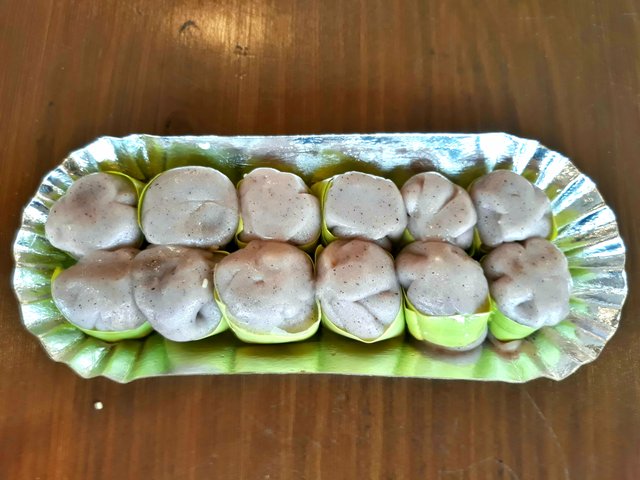
Masi are glutinous rice balls with a peanut and muscovado filling from Cebu, Philippines. It is made from sweetened galapong (ground soaked glutinous rice) shaped into little balls with a filling of chopped roasted peanuts and muscovado or brown sugar. It is then boiled in water until it floats. It can also be steamed. It is traditionally sold wrapped in banana leaves.[1][2][3][4] Masi can be modified to use different fillings, like chocolate or peanut butter.[5] Coconut milk may also be used to give the dough a creamier flavor.[3]
Masi is sometimes anglicized as peanut rice balls.[2] Masi is related to the Tagalog mache and the Kapampangan moche, which are prepared similarly.
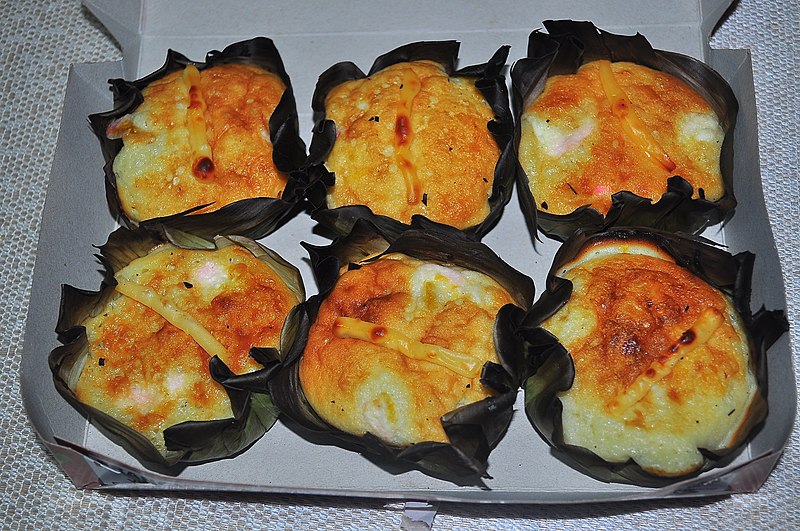
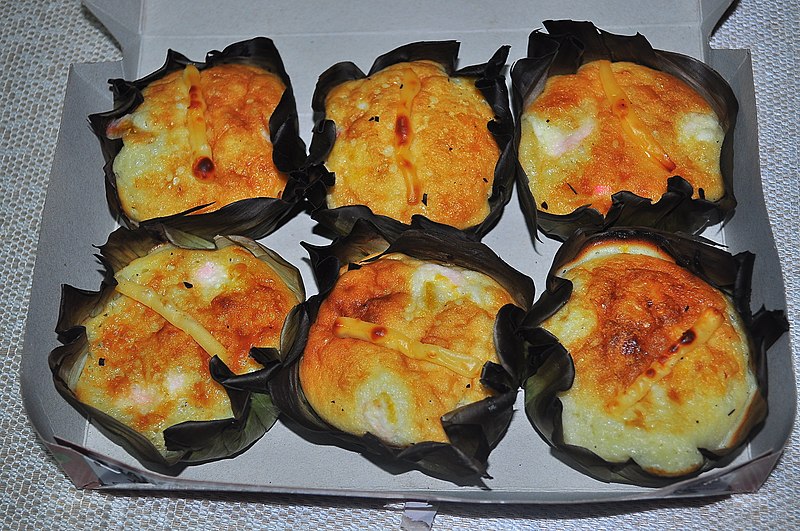
Bibingka is a type of bakedrice cake from the Philippines. It is usually eaten for breakfast, especially during the Christmas season. It is traditionally cooked in clay pots lined with leaves. It is a subtype of kakanin (rice cakes) in Philippine cuisine. Bibingka is also found in Christian communities in eastern Indonesia.
The shared origins of bibingka from the Philippines and Indonesia is widely acknowledged. Especially given that the Indonesian bibingka is from Eastern Indonesia, the regions closest to the Philippines with the most closely related cultures.[5][6]
Some authors have also proposed a connection between the Goan dessert bebinca (or bibik) and the Southeast Asian bibingka due to the similarity in names. They believe that the Portuguese may have introduced it to Southeast Asia from Goa. But this is unlikely, given that the Philippines, where bibingka is most widely known, was never a colony of Portugal. They are also very different; the Goan dessert is a type of layered coconut pudding (similar to Filipino sapin-sapin and Indonesian kue lapis), while bibingka is a simple baked glutinous rice cake. The only similarity is that bebinca and bibingka both use coconut milk.[5][6] Rice-based dishes are also far more diverse in Southeast Asia, where rice is an ancient Austronesian staple crop. Thus it is more likely that the Portuguese introduced the term to Goa from the Philippines, rather than the other way around. Similar to how the art of windowpane oyster shell windows were also introduced from the Philippines to Goa (they are still called capiz in Goa after the Philippine province of Capiz).[7]
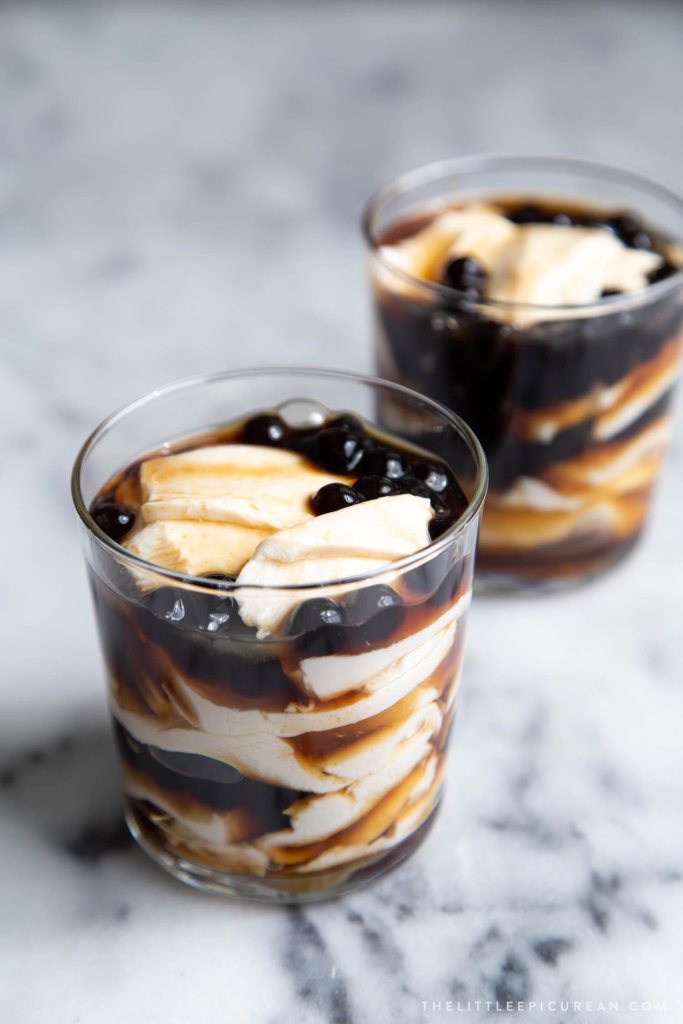
Taho: Filipino Sweet Tofu dessert consisting of silken tofu, arnibal, and tapioca balls FILIPINO SWEET TOFU DESSERT Early in the morning or sometime in the late afternoon, you’ll hear a man yelling “TAHO! TA-HO! TAAAHOO!” That signals it’s time to grab your money and wait outside your door for the taho man. This is a familiar routine for many in the Philippines. I was lucky to experience it during summer vacations as a kid, as well as during my study abroad program in college. Taho is a delicious breakfast or afternoon snack that is enjoyed all year long. WHAT IS TAHO? Taho is a street snack comprised of three ingredients: soft tofu, arnibal (simple syrup), and sago (tapioca balls). It is usually served warm or at room temperature. However, you can also enjoy the tofu chilled for a cooling treat. Indonesia, Malaysia, Thailand and many other neighboring Asian countries have their own version of this sweet tofu snack. Taho. Layered sweet dessert consisting of silken tofu, arnibal, and tapioca balls WHEN IS TAHO EATEN? Taho is usually eaten as a light breakfast or as a sweet afternoon snack. It is enjoyed in the Philippines year round. Taho is served in tiny snack sized portions. It’s usually served in a small 5 to 8 oz cups. Silken tofu is rather low in fat with a small amount of protein. However, taho is technically a dessert because it’s full of sugar. Sugar from the simple syrup and the sugars from the tapioca balls. NOTE: the portions in the glassware photographed above serve 2.
Heyup everyone! First of all it is my gratitude to elcome you guys from my blogging site. So on this blog, I have several topics that I can assure it will help you set your goals and to reach further informations about food including travel and many more that you’ll definitely enjoy.


 Kimkimcuesta's blog