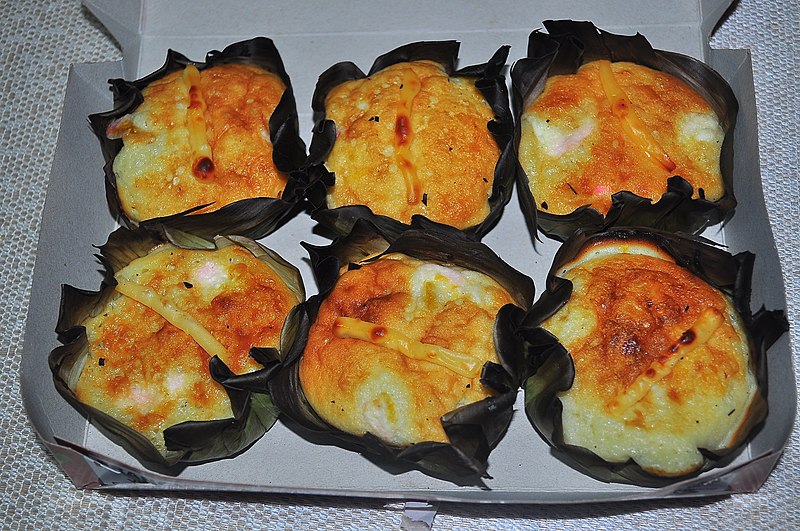
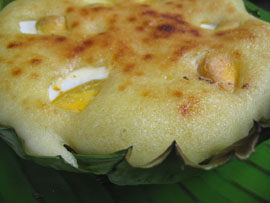
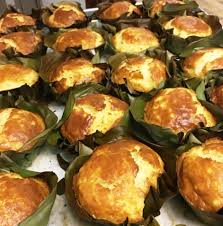
Bibingka is a type of bakedrice cake from the Philippines. It is usually eaten for breakfast, especially during the Christmas season. It is traditionally cooked in clay pots lined with leaves. It is a subtype of kakanin (rice cakes) in Philippine cuisine. Bibingka is also found in Christian communities in eastern Indonesia.
Origins
The shared origins of bibingka from the Philippines and Indonesia is widely acknowledged. Especially given that the Indonesian bibingka is from Eastern Indonesia, the regions closest to the Philippines with the most closely related cultures.[5][6]
Some authors have also proposed a connection between the Goan dessert bebinca (or bibik) and the Southeast Asian bibingka due to the similarity in names. They believe that the Portuguese may have introduced it to Southeast Asia from Goa. But this is unlikely, given that the Philippines, where bibingka is most widely known, was never a colony of Portugal. They are also very different; the Goan dessert is a type of layered coconut pudding (similar to Filipino sapin-sapin and Indonesian kue lapis), while bibingka is a simple baked glutinous rice cake. The only similarity is that bebinca and bibingka both use coconut milk.[5][6] Rice-based dishes are also far more diverse in Southeast Asia, where rice is an ancient Austronesian staple crop. Thus it is more likely that the Portuguese introduced the term to Goa from the Philippines, rather than the other way around. Similar to how the art of windowpane oyster shell windows were also introduced from the Philippines to Goa (they are still called capiz in Goa after the Philippine province of Capiz).[7]
 Kimkimcuesta's blog